M1 Pacific Motorway extension Project – John Holland Gamuda Partnership
The M1 Pacific Motorway extension to Raymond Terrace is one of New South Wales’ most significant road infrastructure projects, improving connectivity, safety and freight efficiency in the Newcastle and Hunter region.
As part of the project, the Black Hill to Tomago section is being delivered by the John Holland Gamuda joint venture, requiring a high-quality, scalable site solution to support a complex, multi-year construction program.
Ausco Modular was engaged in early 2023, with site mobilisation commencing in August 2023. Over the course of the project, Ausco delivered a tailored modular solution that supported the day-to-day operations of a complex, multi-year infrastructure project.
Customer Challenge
The project was established on a greenfield site with no existing infrastructure and required facilities capable of supporting up to 200 personnel throughout construction.
John Holland Gamuda needed more than standard site accommodation. The project required a fully functioning site headquarters that could provide office space for the integrated project team, dedicated worker welfare facilities, reliable utilities and a professional environment suitable for government stakeholders.
The solution also needed to support the project's environmental, social and governance (ESG) commitments by reducing environmental impacts, improving energy efficiency and providing facilities that promoted worker wellbeing and accessibility.
Ausco Modular Solution
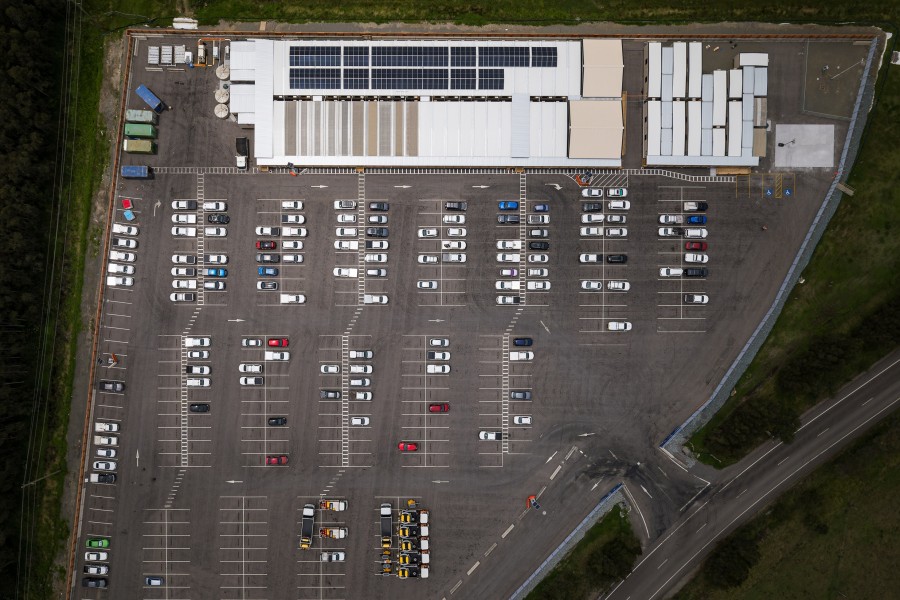
Ausco Modular delivered a comprehensive site solution comprising 75 modular buildings across two compounds.
The primary compound accommodated the integrated project team, including John Holland Gamuda, Transport for NSW and independent certifier personnel, providing a central hub for project management, administration and collaboration. A secondary compound delivered dedicated lunchroom and welfare facilities for construction workers operating across the project site.
A key differentiator during the tender process was Ausco’s integrated renewable energy capability. The site incorporated a solar energy system, battery storage and backup generation, providing a reliable and resilient power solution while reducing reliance on diesel-powered generation.
Sustainability was embedded throughout the design and operation of the site. Features included:
- Solar power generation integrated with the site power network
- Battery storage systems to improve energy efficiency and reliability
- Rainwater harvesting and recirculation systems for toilet cisterns
- Water-efficient tapware and fittings
- Refurbished modular buildings to reduce environmental impact
- Dynamic energy management systems designed to optimise energy consumption
The facilities were delivered to a high standard, including premium kitchen and breakout amenities, such as chilled water systems, creating a comfortable and productive workplace for project personnel.
Worker wellbeing and accessibility were also prioritised through the provision of outdoor BBQ and recreation areas, covered communal spaces, adjustable furniture, compliant lighting and fully accessible pathways and ramps.
Outcome
The modular solution successfully supported project operations throughout the construction program, providing reliable, high-quality facilities for both office-based and field personnel.
The site continued to meet evolving operational requirements throughout the construction program, demonstrating the flexibility and scalability of the modular solution.
John Holland Gamuda reported a high level of satisfaction with the quality, functionality and presentation of the facilities. The site provided a professional environment for project teams, workers and government stakeholders, while supporting sustainability objectives and worker wellbeing outcomes.
The project also demonstrated the value of integrating renewable energy and resource-efficient infrastructure into temporary construction environments, helping to reduce environmental impacts without compromising operational performance.
Conclusion
The Black Hill to Tomago section of the M1 Pacific Motorway extension to Raymond Terrace demonstrates how tailored modular infrastructure can support the successful delivery of large-scale transport projects.
By combining high-quality accommodation, worker-focused design and sustainability-led innovation, Ausco Modular delivered a flexible and resilient site solution that met the needs of integrated project team, including John Holland Gamuda, Transport for NSW and independent certifier personnel throughout the construction program.
The project stands as a strong example of how modern modular facilities can create productive, sustainable and professional workplaces that support collaboration across complex infrastructure projects while maintaining operational efficiency, environmental responsibility and a positive experience for all personnel working on site.